
Environment
As Burlington grows, we are committed to managing our environmental impact responsibly. We are addressing key environmental challenges—ranging from energy and climate change to chemical management and waste—while delivering value for our customers and our business.
Across our nationwide network of stores, distribution centers, and corporate offices, Burlington works to reduce greenhouse gas emissions, improve energy efficiency, and minimize waste. At the same time, we are strengthening resilience and enhancing regulatory readiness to support sustainable, long-term growth.
Our Sustainability Strategy Focus Areas:
- Focus and align environmental sustainability efforts to achieve our goals that reduce environmental impact
- Increase use of renewable energy across our operations
- Educate and engage associates
- Enhance Burlington’s reputation by incorporating environmental sustainability into our caring culture
- Partner with non-merchandise suppliers for products and services with reduced environmental impact
Our Climate-related Goals
- Burlington's environmental strategy focuses on improving operational efficiency across our stores, distribution centers, and offices to reduce environmental impact and support long-term business resilience. In 2021, we set two climate-focused goals to achieve by 2030.
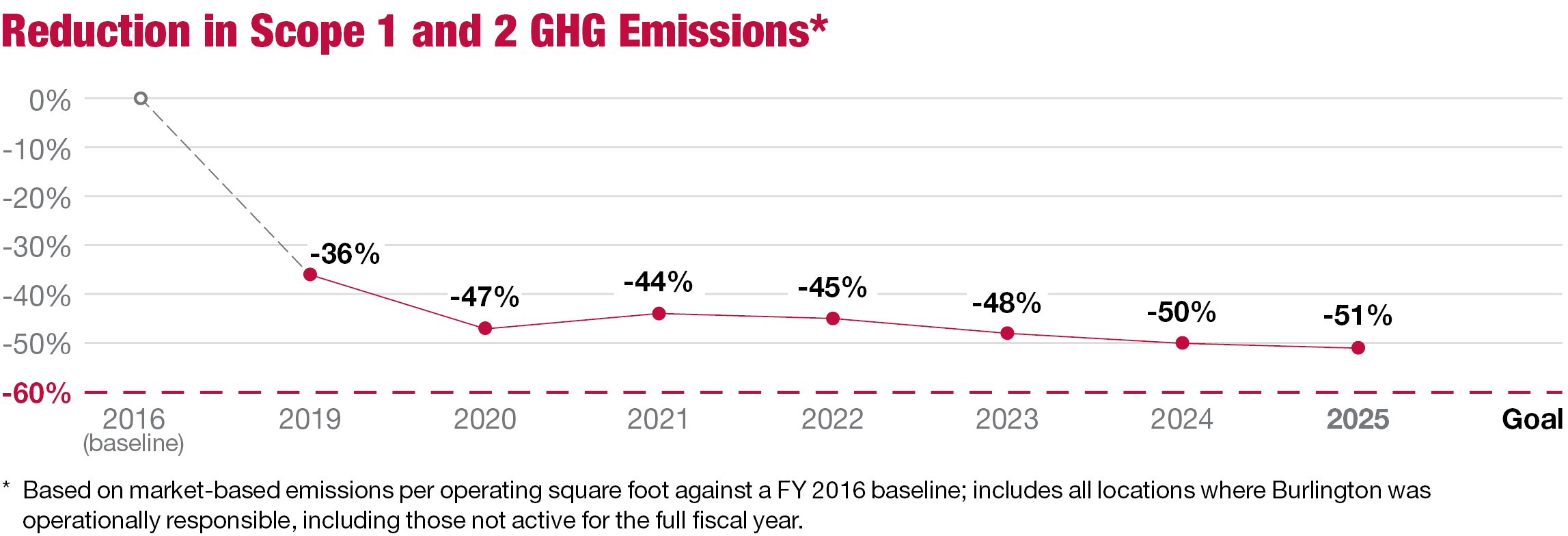
- 60% reduction in Scope 1 and 2 greenhouse gas emissions*
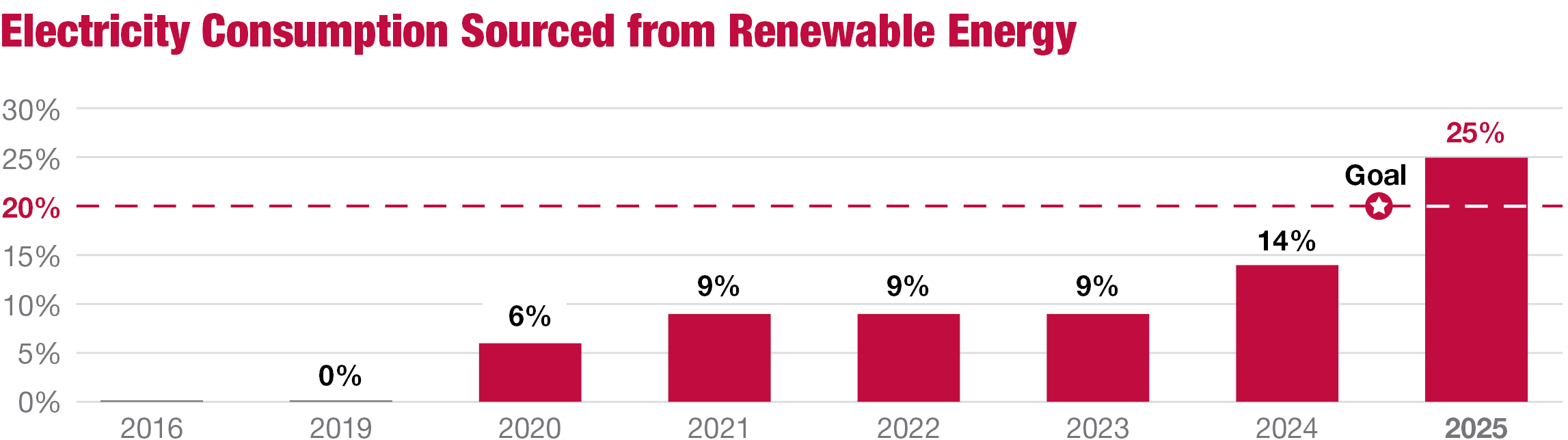
- 20% of electricity consumption provided by renewable sources
*Based on market-based emissions per operating square foot against a FY 2016 baseline; includes all locations where Burlington was operationally responsible, including those not active for the full fiscal year.
Climate Resilience
Burlington takes a proactive approach to managing climate-related risks across our store network. Preparedness protocols vary by region, accounting for hurricanes, wildfires, and other climate-related events. At the center of our emergency response capability is the Burlington Response and Investigations Center, a 24/7 security operations center that monitors for weather and safety disruptions and activates a structured response plan when major events threaten our facilities.
Greenhouse Gas (GHG) Emissions
Burlington tracks and manages greenhouse gas emissions across our operations, with a focus on reducing our impact over time and preparing for an evolving regulatory landscape.
Scope 1 and 2 GHG Emissions
Our emissions reduction goal is to achieve a 60% reduction in Scope 1 and Scope 2 GHG emissions per operating square foot by 2030. We measure progress on a per-square-foot basis to help ensure our results reflect improvements in operational efficiency as Burlington continues to grow. Progress toward this goal is supported by investments in energy efficiency initiatives and renewable energy, which help reduce the emissions associated with our operations.
Energy
Burlington manages energy use across a large and growing portfolio of stores, distribution centers, and corporate offices, with a focus on improving energy efficiency and increasing renewable energy at scale.
Energy Efficiency
Burlington's energy management system spans our full portfolio of facilities, providing visibility into store conditions and energy consumption to support proactive energy management. We deploy HVAC technology and advanced analytics to identify equipment issues and demand spikes, as well as participate in demand response programs to support local grid stability.
Renewable Energy
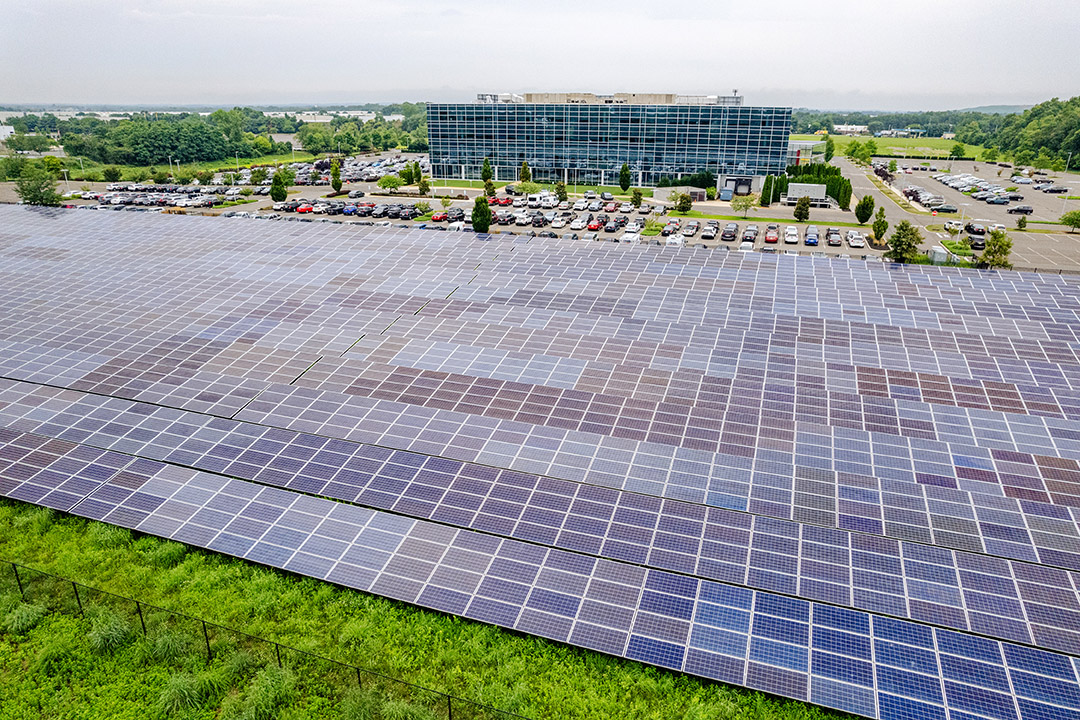
Increasing the use of renewable energy is a key component of Burlington's sustainability strategy. We are expanding on-site solar installations and pursuing renewable electricity supply agreements in markets where these options are available.
Our renewable energy goal is to source 20% of our electricity consumption from renewable sources by 2030. In 2025, Burlington benefited from opportunistic renewable energy certificate (REC) exchanges in high value REC markets, and as a result, we surpassed our goal five years ahead of schedule. We plan to build on this momentum and continue increasing renewable energy consumption through 2030 in support of our broader climate-related goal to reduce Scope 1 and 2 emissions by 60%.
Waste
At Burlington, our dedicated Waste team oversees recycling and waste operations across stores, DCs, and corporate offices — supporting consistent diversion practices that reduce landfill contributions and lower transport and disposal costs.
Waste Management
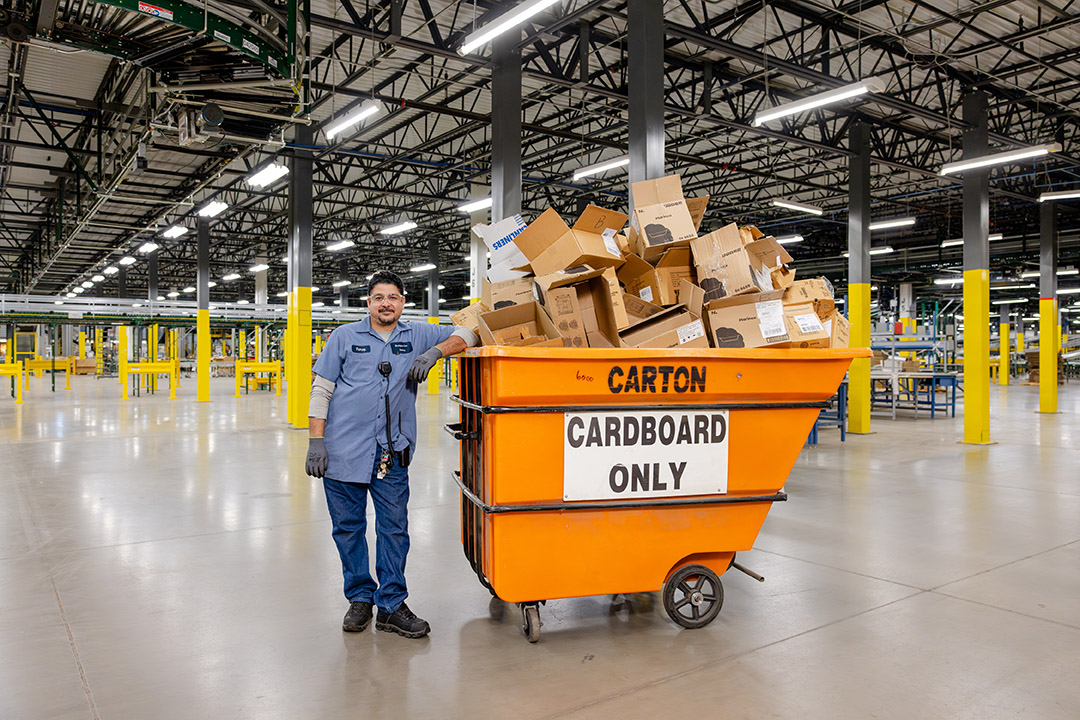
Burlington's waste management program combines smart technology with ongoing associate training to improve recycling and disposal consistency across our operations. Compactor monitors use real-time data to optimize pickup scheduling, while programs such as cardboard backhauling and small trash balers help stores operate more efficiently and divert more material from landfill.
Hazardous Waste
Burlington carefully manages regulated waste, including everyday products like beauty items and flammable liquids that require segregation from standard waste disposal channels. To promote consistent compliance, we voluntarily hold our stores nationwide to the most stringent state-level regulations and work to divert regulated materials from disposal wherever possible through donation programs.